Necrophosis and Zdzislaw Beksinski: Painting a Dead World
Read ten reviews of Necrophosis and one name keeps coming back, and it belongs to a Polish painter who died in 2005 and never once explained a picture: Zdzislaw Beksinski (in Polish, Zdzisław Beksiński). Dragonis Games names him first among its influences, ahead of H. R. Giger and H. P. Lovecraft, and the press followed the studio’s lead almost to the letter.
This piece looks at who Beksinski was, what his paintings look like, and where the line between his work and the game can be drawn honestly.
An architect from Sanok
Beksinski was born in 1929 in Sanok, a town in south-eastern Poland. He studied architecture in Kraków and went back to Sanok to supervise building sites. He was never trained as a painter. Before painting he worked in photography and sculpture, and taught himself the rest.
He painted on hardboard panels he prepared himself, usually with classical music playing. In 1977 he moved to Warsaw, where he lived and worked until his death in February 2005. He left a large part of his work to the Historical Museum in Sanok, which still keeps the biggest public collection of it.
The fantastic period
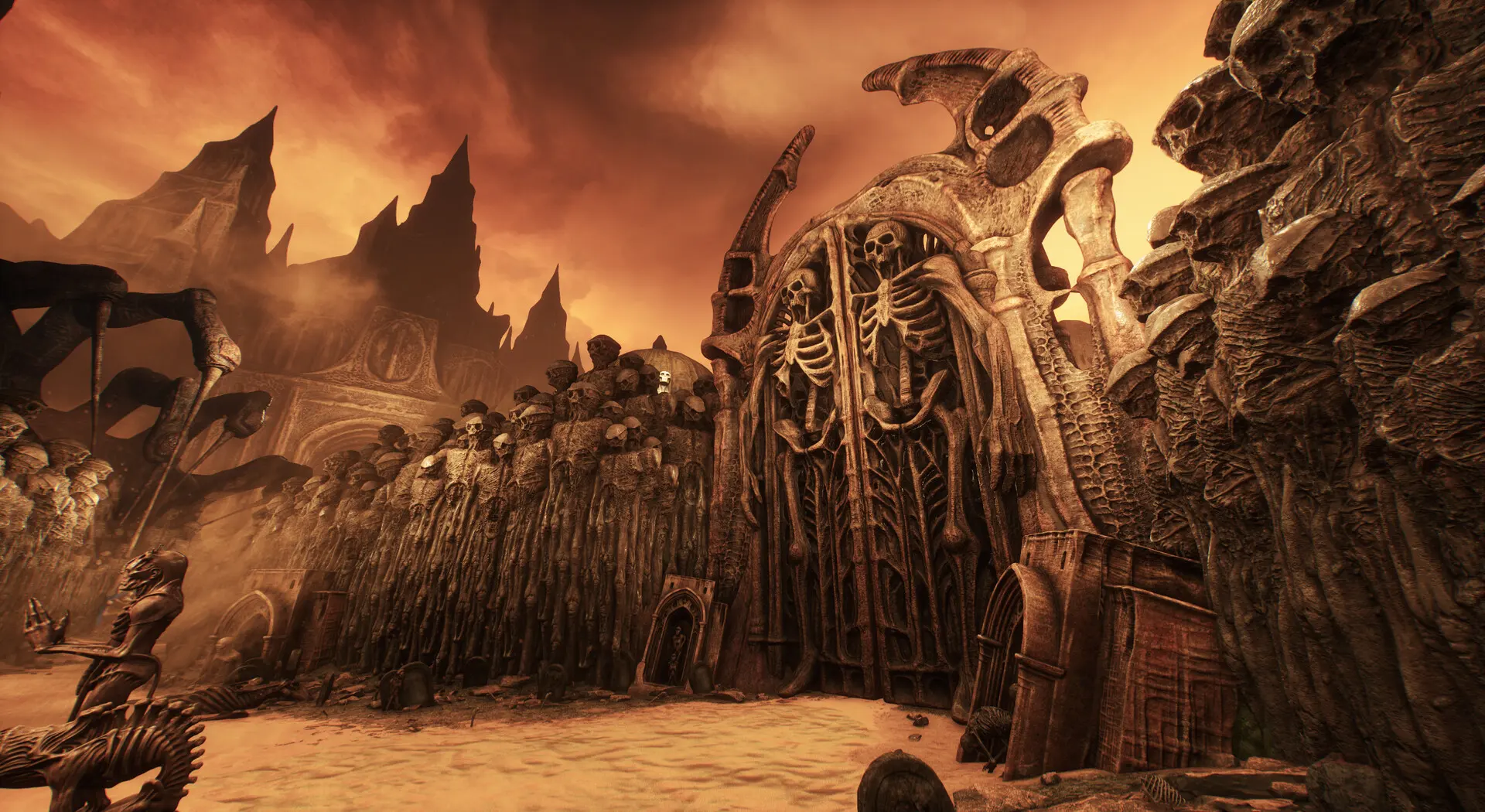
The paintings most people know come from what is usually called his fantastic period, from the late 1960s to the mid-1980s. They share a short list of things. Deserts that run to the horizon under skies of rust, ochre or sickly green. Buildings that look grown rather than built, often closer to a ribcage than a cathedral. Figures far too tall, wrapped in cloth or reduced to bone, standing as if they had been waiting for centuries and would go on waiting.
Critics and collectors file this under dystopian surrealism. The label is useful and a little misleading. Beksinski had no programme and belonged to no movement. He gave his paintings no titles, and when asked what they meant he declined to say. He left the decoding to whoever stood in front of the panel. That refusal is a large part of why they unsettle: there is no caption to retreat to.
In the 1990s he moved to digital photomontage, but his reputation outside Poland rests mostly on the panels from those two decades.
What the game says about itself
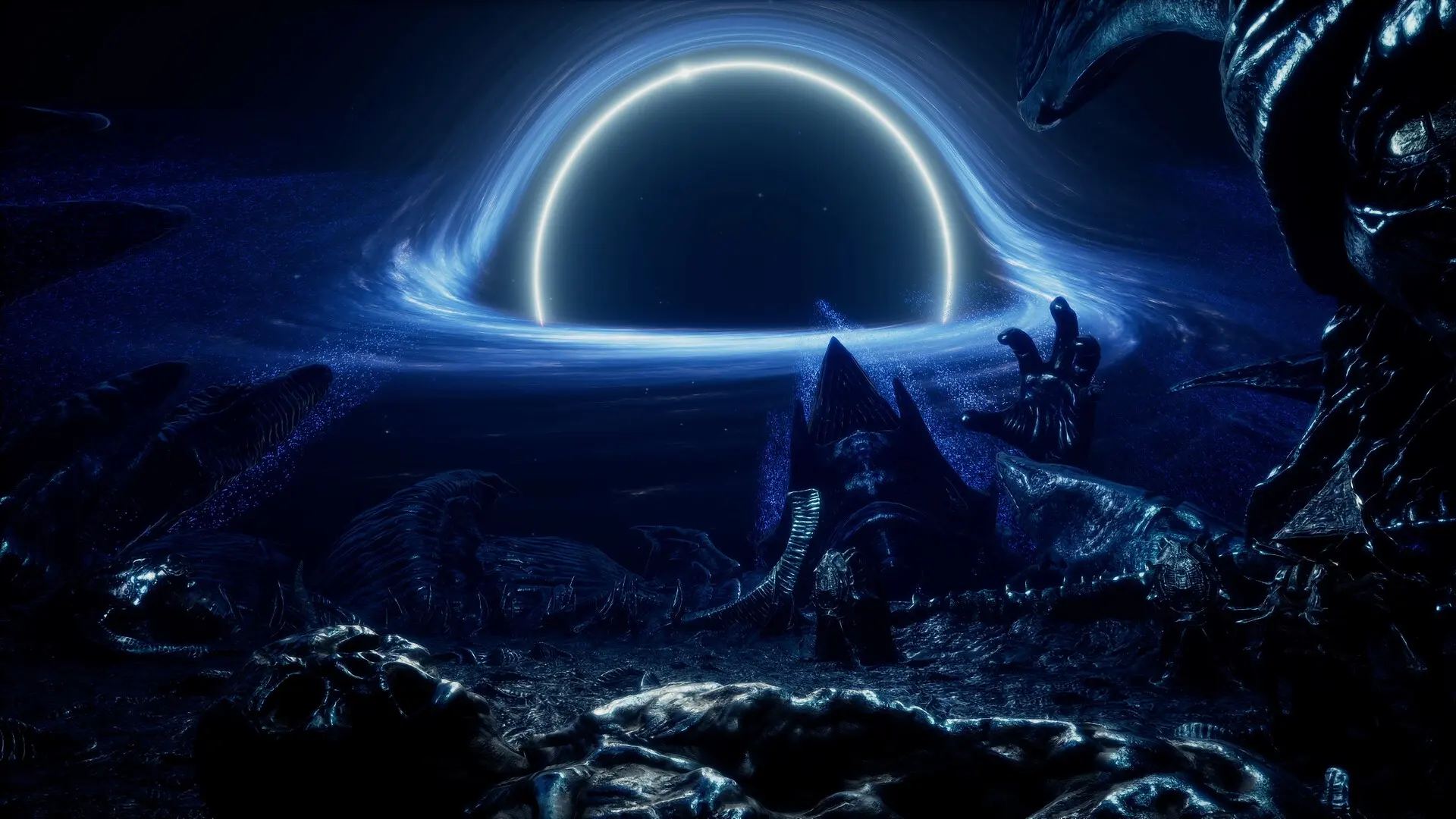
Necrophosis came out on Steam on 25 April 2025, made by Ares Dragonis and Adonis Brosteanu. Its store page sets the scene in a world “billions of years after the universe met its demise”, where a curse called Necrophosis “inflicts decay upon everything it touches”. The studio’s own description of the game is shorter: a desert of bone and rust after Beksinski.
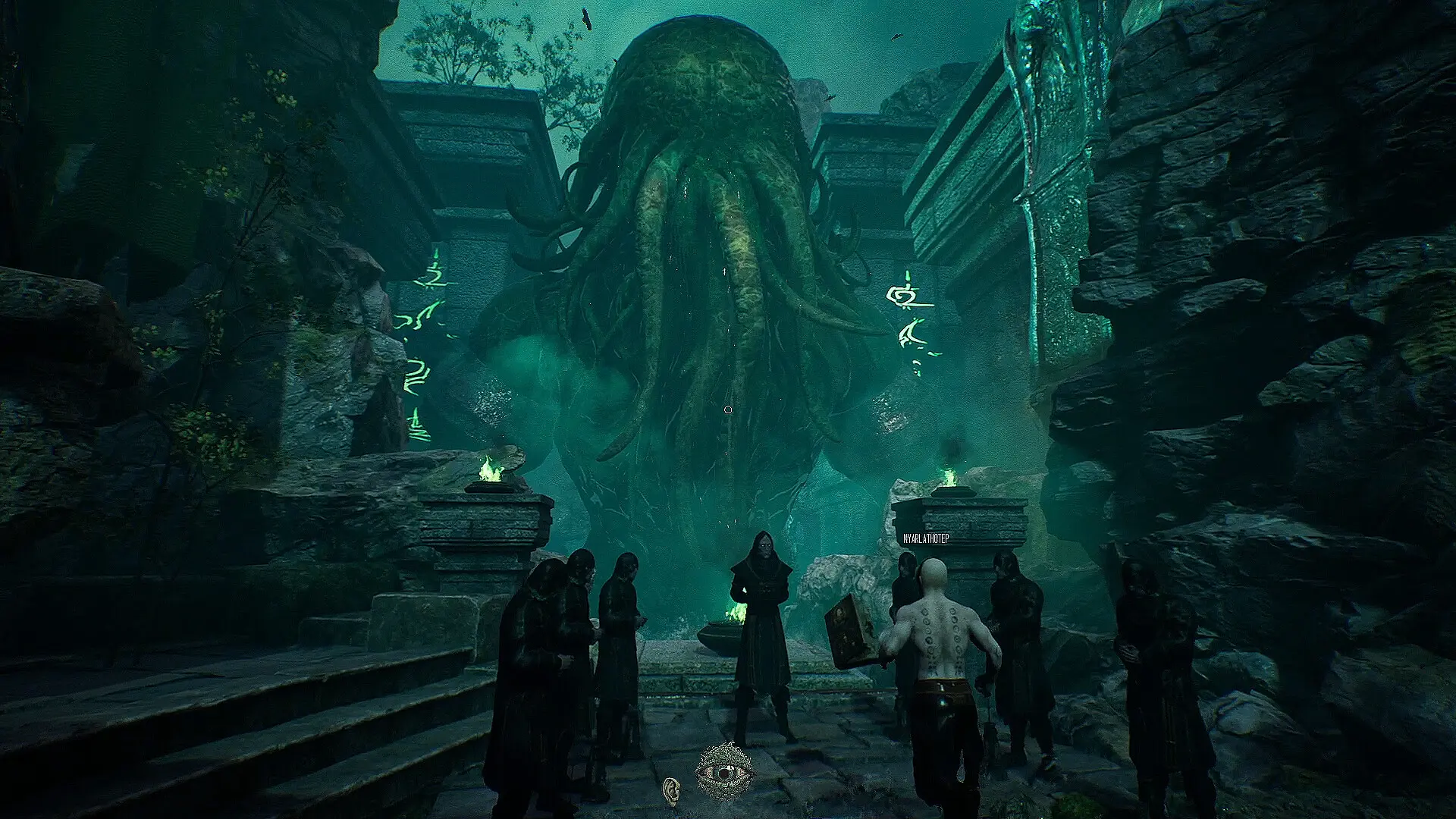
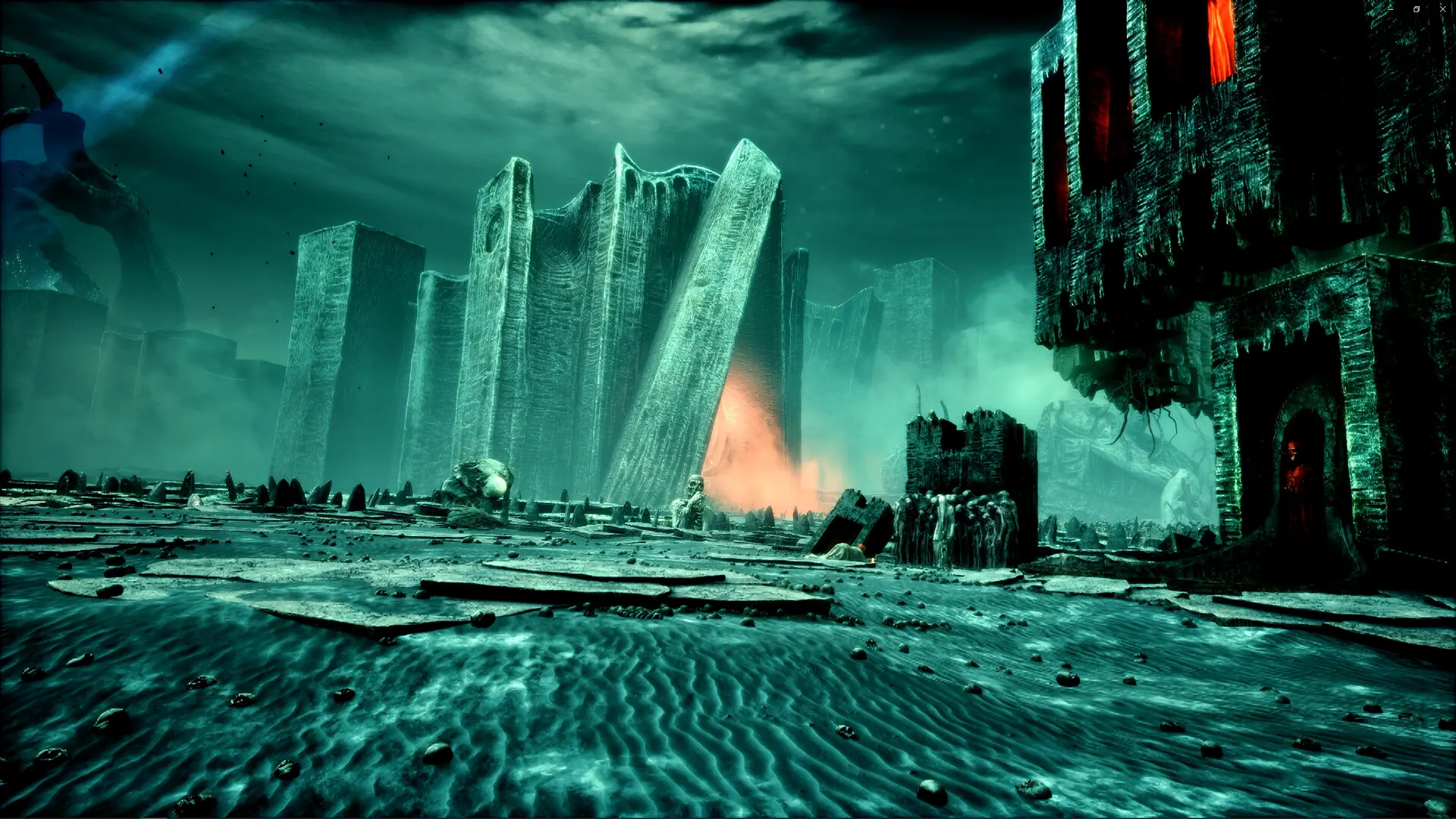
Look at the store screenshots and the overlap is easy to see. Leaning stone towers stand in rippled sand. Skeletal figures several storeys high sit at the edge of an ochre haze. Structures read as bone before they read as architecture. As far as the screenshots show, what the game borrows is a vocabulary rather than any single painting: scale, emptiness, a palette of burnt colours, and the sense that something enormous died here long before you arrived.
There is a second, quieter link, and it is a reading rather than a stated fact. Beksinski refused to explain his images. Necrophosis tells its story through narration and poems, and the Subconsciousness chapter’s store page says its places “do not explain themselves”. A game that withholds meaning sits comfortably next to a painter who did the same.
How the critics named it
When Necrophosis: Full Consciousness reached PlayStation 5 and Xbox Series X|S on 28 May 2026, the reviews arrived with the painter already in the headline or the first paragraph. A few of them, quoted from the source pages:
Like exploring a living Beksiński painting
Creative Bloq, review subhead (the sentence goes on to say the game lacks depth)
Some beautifully wretched imagery that recalls modern masters
Adventure Game Hotspot, PC review
Graphically, Necrophosis is stunning in ways that are often genuinely uncomfortable to look at.
Impulsegamer, PS5 review
Creative Bloq went further than its review and ran a separate design feature on the game’s decayed cosmos, later syndicated by Yahoo Tech under a headline crediting the surrealist painter. VGTimes put all three influences, Giger, Beksiński and Lovecraft, in the headline of its release trailer story. In Greece, GameOver.gr gave the game 7/10 and wrote that visually it earns practically top marks.
The same reviews split on the puzzles, and Creative Bloq’s headline says so outright. On the art, every review quoted here agrees.
Painting versus space
A Beksinski panel is fixed. You stand in front of it and the horizon stays where he put it. Necrophosis lets you walk toward that horizon. According to the store page of the Necrophosis Digital Artbook, much of the world was built directly through raw 3D sculpting rather than painted concept art, so the forms that recall the paintings were made as objects first. You can circle them, stand under them, and see their backs, which no painting ever showed.
That is the real difference between influence and imitation here. The game takes a painter’s mood and asks what it would feel like to be inside it for a few hours, with no weapon and no explanation.
Necrophosis is on Steam and GOG, and on PS5 and Xbox Series X|S as Necrophosis: Full Consciousness. Screenshots, trailers and every store link are on the Necrophosis page.