Necrophosis and H. R. Giger: Biomechanics Built from Bone
Dragonis Games lists three influences behind Necrophosis. Zdzislaw Beksinski comes first and gets most of the press. The second name is Swiss, and it fits the game’s darker, glossier corners: H. R. Giger.
Hans Ruedi Giger
Giger was born in 1940 in Chur, in eastern Switzerland, and died in Zurich in 2014. Like Beksinski, he trained in design before art: he studied architecture and industrial design in Zurich. That training shows in everything he made afterwards. His figures have joints, ducts and repeating segments, as if someone had engineered them.
He worked mostly with an airbrush, in a narrow range of greys, blacks and metallic tones. The word he used for his style was biomechanical: bodies fused with machinery until you cannot say where one ends. Vertebrae turn into pipes. Ribs turn into cables. Faces sit inside walls that look half grown, half cast.
From a book called Necronomicon to Alien
In 1977 Giger published a collection of his paintings under the title Necronomicon. The name is borrowed from H. P. Lovecraft, whose fiction invented a forbidden book of that title. In The Dunwich Horror (1929), for example, a copy of the Necronomicon sits in the library of Miskatonic University and a family of sorcerers wants it badly.
The director Ridley Scott saw Giger’s book and brought him onto Alien (1979). Giger designed the creature and much of the alien world around it, and shared the Academy Award for Best Visual Effects in 1980. From then on, biomechanical horror in film and games has been measured against his work. Since 1998 the Giger Museum in Gruyères, Switzerland, has kept a large part of it on permanent display.
Where Giger shows in Necrophosis
The studio has not published a list of which images owe what to whom, so what follows is a reading of the public material.
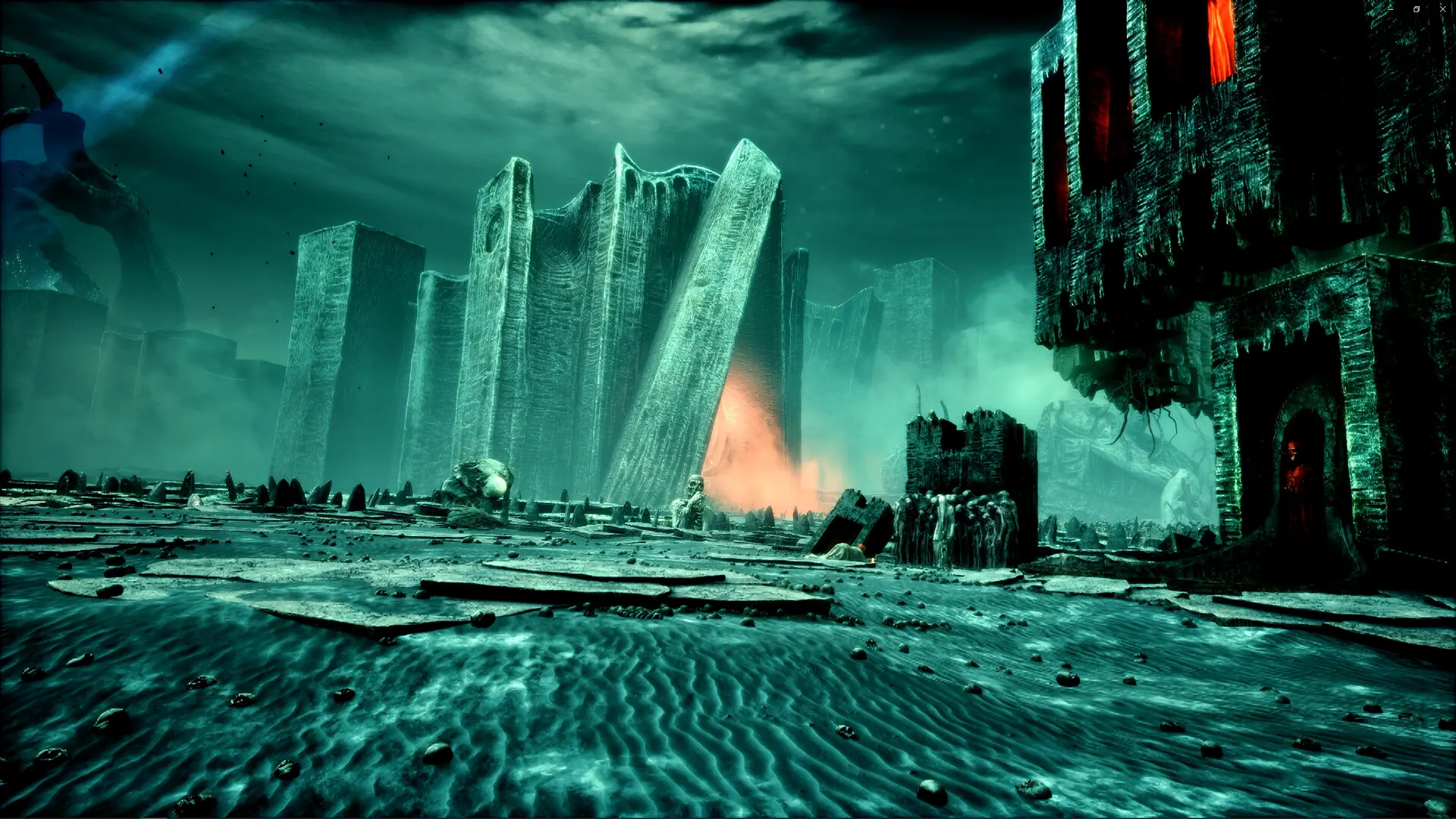
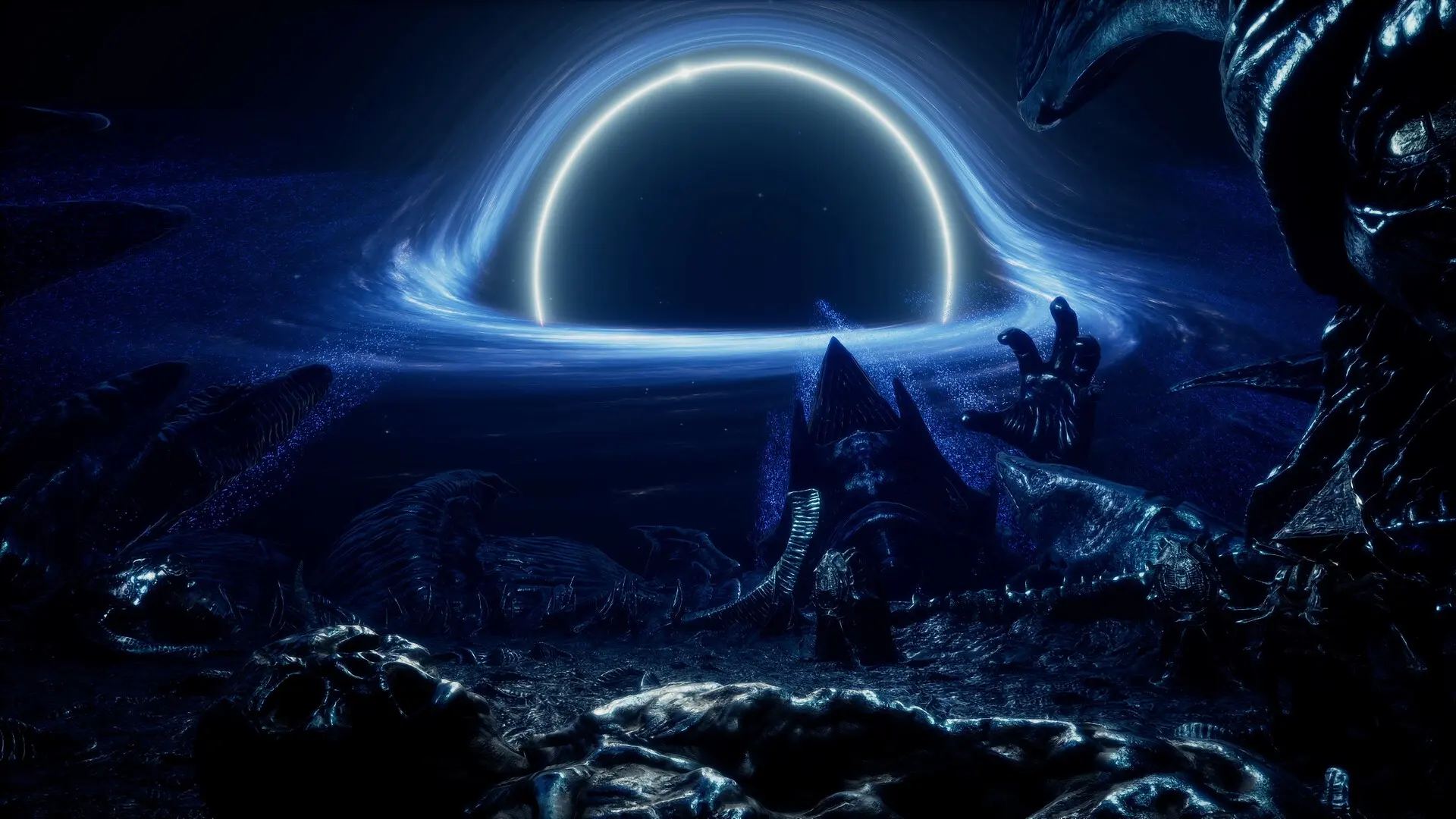
The Steam page describes “unsettling shapes” and “grotesque forms”, and the store screenshots bear that out in two registers. The first is Beksinski’s: open desert, burnt colours, towers leaning in the sand. The second is darker. In some shots the light drops to deep blue and black, and the ground is covered with glossy, segmented shapes that could be bone or machinery. Their surfaces have the ribbed, repeating quality of Giger’s airbrush work, and the palette moves from Beksinski’s ochre toward Giger’s steel.
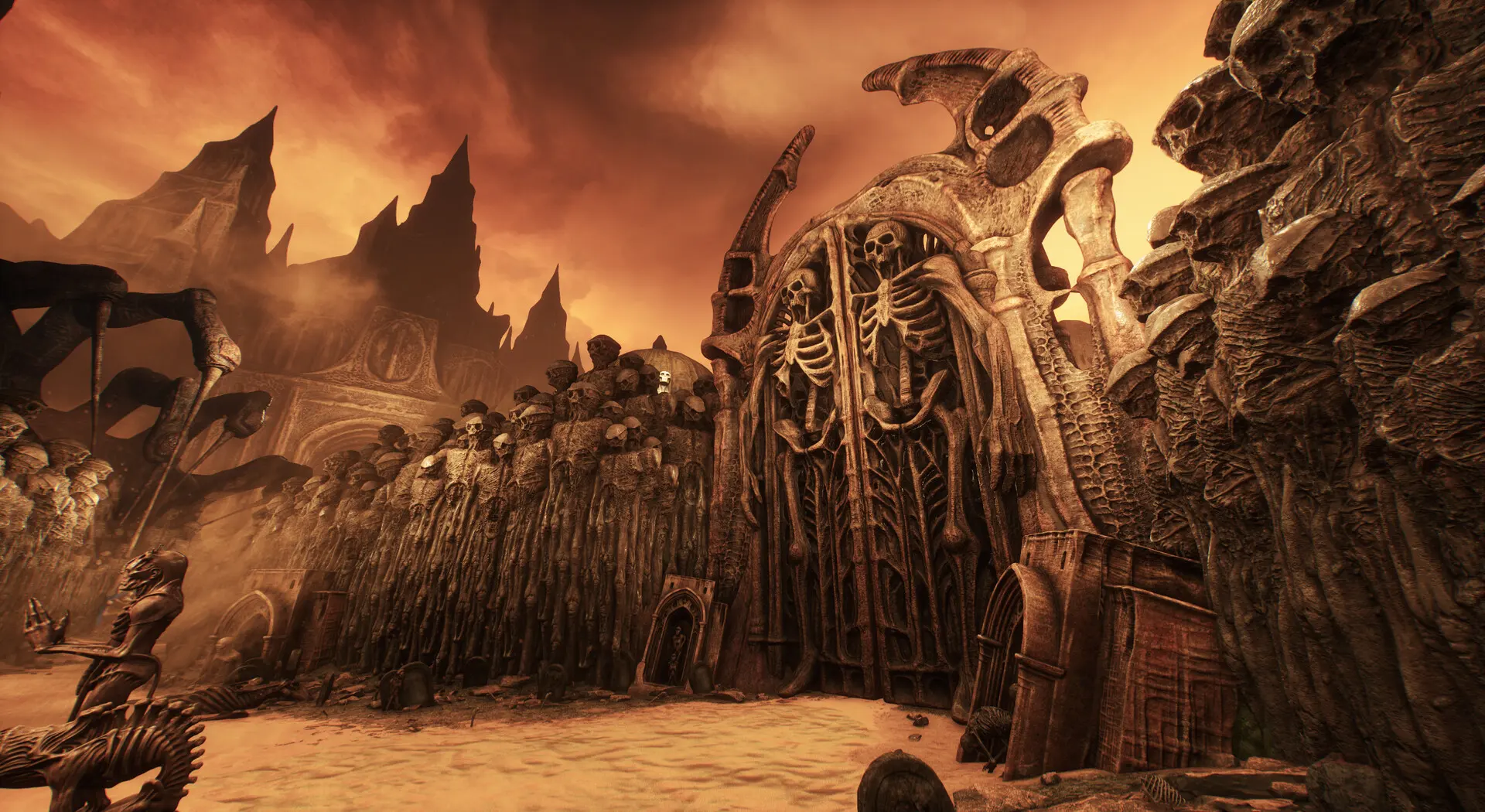
Bone is the other clue. The store art and screenshots are full of structures assembled from ribs and skulls: walls and gateways that look built from skeletons. Giger’s biomechanics fuse flesh with machine. Necrophosis, at least on the evidence of its screenshots, swaps the machine for bone and rust. The structures keep his logic of repeated, load-bearing anatomy, and drop the chrome.
Even the achievement names lean on the body and on worship. “Rancid Worship”, “Titan’s Desire” and “Oppressive Intellect” are all on the game’s Steam page. Read them as mood rather than as plot; the game does not explain them on its store page.
Built from sculpts
There is a practical reason the Giger side of the game reads so physical. The store page of the Necrophosis Digital Artbook, released on 28 May 2026, says much of the world was built “directly through raw 3D sculpting workflows” rather than painted concept art. The 110 pages collect creature designs, “surreal architecture and decayed forms”, and high-resolution sculpts, all credited to solo artist Ares Dragonis.
Giger, too, worked in three dimensions when he could. Beyond the airbrush paintings he made sculptures, furniture and whole interiors. A biomechanical form makes most sense when you can walk around it, and a game built from sculpts gives the player exactly that.
The Lovecraft thread
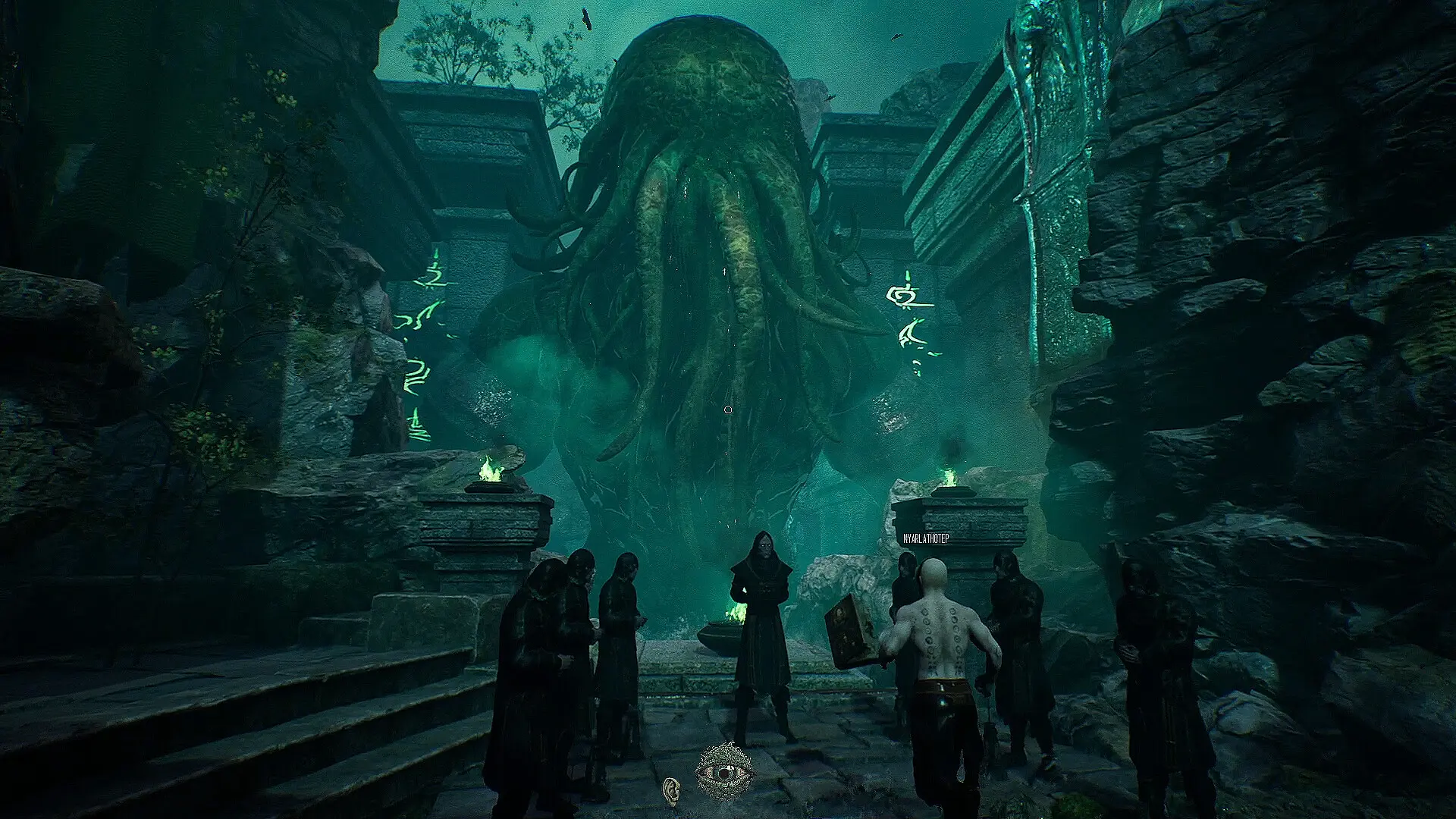
Giger named his most famous book after Lovecraft’s grimoire. Necrophosis names Lovecraft as its third influence. One line in its Steam description invites a comparison: you awaken in a world “where death reigns supreme but even death may die”. Lovecraft readers will recognise the shape of that phrase. In The Call of Cthulhu (1928) a couplet from the Necronomicon is quoted:
That is not dead which can eternal lie, / And with strange aeons even death may die.
H. P. Lovecraft, The Call of Cthulhu (1928)
The store line points back to that couplet, though the studio has not said so in as many words. Either way, the three influences meet in one place: a dead universe, built as anatomy, where even death is not final.
Necrophosis is on Steam and GOG, and on PS5 and Xbox Series X|S as Necrophosis: Full Consciousness. Screenshots, the release trailer and store links are on the Necrophosis page.